3 Best Immersion Blenders, Lab-Tested and Reviewed
If you cook a lot of soups or sauces, these stick blenders can be a game-changer

When you shop through retailer links on our site, we may earn affiliate commissions. 100% of the fees we collect are used to support our nonprofit mission. Learn more.

Immersion blenders may not be helpful if frozen margaritas are on the menu (for that, you’ll need a solid full-sized blender). But if you have smaller blending tasks to accomplish, you’ll be glad to have an immersion blender on hand.
These blenders, aka stick blenders, are handheld electric mixing devices with a top that you grip, a baton-like shaft, and a spinning blade protected by a guard at the bottom. Some come with accessories, such as whisks, choppers, milk frothers, beaters, and blender jars that expand their functionality. Immersion blenders do have their limitations: They’re not suitable, for example, for crushing ice. Plus, they’re not as powerful as full-sized blenders or as quick as personal blenders.
Still, these handheld appliances are practical for tasks like making a small batch of whipped cream, blending soups, preparing salsas, or combining basil, pine nuts, and garlic for pesto. Two other advantages: They take up little space (they fit in a drawer) and can be relatively inexpensive. The models in our ratings range from about $30 to $165.
“Immersion blenders are great for quick tasks, and they keep splatter to a minimum, so cleanup is simple,” says Elias Arias, who leads CR’s blender testing.
To use an immersion blender, submerge the blade directly into a pot, bowl, or other container, press a button, and if the immersion blender has multiple speeds, adjust the speed as needed.
Below, in alphabetical order, are the three best immersion blenders from our tests. CR members have access to full ratings and reviews of these models, as well as ratings on immersion blenders from brands such as Blendtec, Breville, Cuisinart, GE, KitchenAid, Mueller, and Vitamix in our full immersion blender ratings. For advice on shopping for any type of blender, check our blender buying guide.
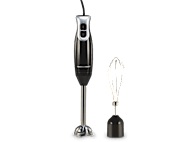
The Hamilton Beach 59742F is the least expensive immersion blender in Consumer Reports’ ratings, but it easily handles our soup purée tests, in which we blend vegetables in water for soup. It also performs very well in our yogurt blend tests, powering through yogurt and frozen fruit. Unlike some other immersion blenders, it doesn’t have a turbo or pulse setting, but it is lightweight, which could make it a more convenient option, especially for those with limited hand or arm strength.
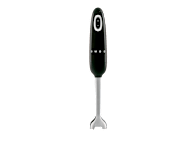
If you love a good bowl of soup, the Smeg Retro HBF11 could be the right choice. It earns an excellent score in our tests of how smoothly it blends vegetables and water. It also does a very good job of blending fruit and yogurt for smoothies, so you don’t necessarily have to rely on a full-sized blender. Smeg says this blender has five speeds, but, unlike some other immersion blenders, it doesn’t come with any accessories.
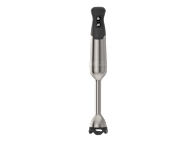
Vitamix makes top-performing full-sized blenders, so it makes sense that the Vitamix 67991 immersion blender is a top performer as well. Like the other models on this list, it easily plows through raw vegetables and water for soup, and it’s very good at blending basic frozen ingredients for smoothies. For its price, though, it’s fairly bare bones. It doesn’t come with a whisk, beaker, or chopper, as some less-expensive immersion blender models do. It’s also one of the heaviest immersion blenders in our ratings.
How CR Tests Immersion Blenders
Consumer Reports rates blender performance based on lab testing to help you find the right one for your kitchen tasks.
For our purée tests, we blend potatoes, carrots, frozen green peas, and water. For our yogurt blend tests, we blend oranges, apples, carrots, yogurt, and milk. The best ratings reflect the smoothest results.
 BEST TIME TO BUY:


