8 Best Air Purifiers of 2026, Tested by Our Experts
We reviewed scores of models for every room. These options from Blueair, Coway, Honeywell, and others blew us away.


When you shop through retailer links on our site, we may earn affiliate commissions. 100% of the fees we collect are used to support our nonprofit mission. Learn more.

Americans spend roughly 90 percent of their lives indoors. That’s why having good-quality air in your home is essential to maintaining a healthy lifestyle. An air purifier can help with that—offering cleaner, fresher air at the touch of a button.
It’s even more helpful if you live in a region that’s regularly exposed to wildfire smoke or if someone in your home suffers from seasonal allergies. However, nearly everyone can benefit, including those who cook often, use a variety of cleaning products, or have pets that shed.
Air purifiers work by drawing in air pollutants, trapping them with filters, then dispersing clean air back into your space. Many are equipped with a certified HEPA filter, which is rated to capture at least 99.97 percent of particles 0.3 micron or larger in size. When used with an activated carbon filter, an air purifier can also tackle smells, viruses, and volatile organic compounds, which is particularly helpful during natural disasters such as wildfires.
Our ratings of nearly 170 air purifiers confirm that some models are better than others. The best air purifiers can remove particles at any speed setting, says Misha Kollontai, who oversees air purifier testing for Consumer Reports. The worst air purifiers, he says, will struggle even when running at the highest speed and produce a fair amount of noise.
Below, we provide a closer look at the top eight air purifiers, listed according to the room size each is designed to cover. We designate extra-large rooms as 650 square feet or more, large rooms as 350 to 650 square feet, medium rooms as 150 to 350 square feet, and small rooms as 150 square feet or less.
For more options, explore our comprehensive air purifier ratings, where you can read about all the models we currently rate and filter them according to your needs (including price, brand, room size, weight, and predicted reliability). To learn more about how air purifiers work, check out our air purifier buying guide.
Best Air Purifiers for Extra-Large Rooms
At 50 pounds, the Coway Airmega ProX is by far the heaviest air purifier in this roundup, but it also provides the best performance. On both higher and lower speeds, the model excels at clearing rooms of dust, pollen, and smoke. It’s equipped with a certified HEPA filter, an activated carbon filter, and a washable pre-filter that captures larger pollutants like pet hair.
The Airmega ProX does not ace our noise tests, but its scores are reasonable. It has an auto-sensor that can detect when air quality dips and kick into higher gear.
But the ProX’s top-tier performance comes at a hefty price. We estimate that it costs $259 annually for filter replacements and energy costs, assuming you run the filter 24/7.
Unlike many of the other air purifiers shown here, this one doesn’t have a remote control or an app. It features three speeds and a filter indicator. CR members are highly satisfied with their Coway air purifiers and give them top marks for predicted reliability.
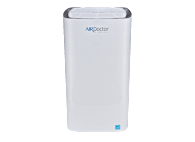
At high speeds, dust, pollen, and smoke are no match for the AirDoctor AD5500. It not only excels at clearing the air but also is easy to use. Noise, however, is an issue. It’s loud when operating at high speeds. At a lower speed, the noise isn’t as bad, but it does only a middling job of removing airborne particles at this setting. This particular model is one of the most expensive in our ratings and one of the most expensive to operate—roughly $343 per year. CR members who own AirDoctor units give the brand high marks for predicted reliability and owner satisfaction.
Best Air Purifiers for Large Rooms
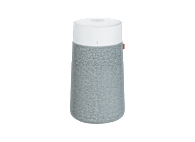
The portable Blue Pure 311i+ Max from Blueair features four speeds and a dirt sensor that kicks the machine into higher gear when necessary. It also has an indicator light that alerts you when it’s time to change or clean the filter. On its higher setting, the model is terrific at removing dust, pollen, and smoke, but expect a bit of noise. Try it on low and you’ll enjoy more quiet while still getting near top-level results. Our testers report that this Blueair model is particularly easy to use. Plus, it can be controlled via an app.
This model is designed for use in a large space and costs about $136 a year to maintain. Because it weighs just 8 pounds, it can be easily moved from room to room. CR members find Blueair air purifiers to be highly reliable, and they’re very satisfied with their purchases.
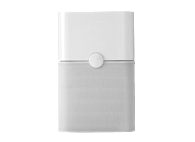
The larger Blue Pure 211+ offers the same impressive performance as the Blue Pure 311i+ Max above, meaning you can count on it to effectively remove pollutants like dust, pollen, and smoke from your room’s air on both the highest and lowest settings. It weighs nearly 16 pounds and can sit on the floor or a tabletop.
But it’s missing a few of the features on the 311i+ Max. It doesn’t come with an additional activated carbon filter or a washable pre-filter, which traps larger particles before they reach the HEPA filter. It also doesn’t have a colored light to indicate your room’s current air quality, a remote control, or the ability to be controlled with an app. Like many Blueair models we’ve tested, it’s also pretty noisy at its highest setting.
The 211+ costs an estimated $214 annually to maintain, factoring in filter replacement and additional electricity costs. According to a survey of CR members, Blueair air purifiers are highly reliable, and owners report they’re very satisfied with their purchase.
Best Air Purifiers for Medium-Sized Rooms
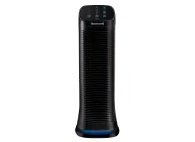
The Honeywell AirGenius 5 HFD-320 performs well at its highest speed, removing smoke and dust particles with relatively low noise. The model uses "intense field dielectric" (iFD) filtration, which captures particles using an electrostatic field within a washable filter. These machines typically have lower maintenance costs because they don’t require regular HEPA filter replacement. The estimated annual operating cost of this machine is $88.
In general, Honeywell air purifiers receive a so-so mark for owner satisfaction and an above-average score for predicted reliability in CR’s member surveys.
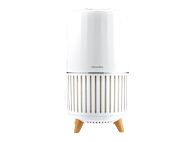
The HoMedics AP-T200 excels at its most important job—trapping the troublesome pollutants in your home’s air. It earns our top score for dust, pollen, and smoke removal on the highest setting and an admirable score on the lowest setting. It has three fan speeds and is equipped with a certified HEPA filter and an activated carbon filter.
It’s easy to operate and can sit on the floor or perch on a tabletop. It can be conveniently controlled with an app. You can also tell how clean your air is at any given moment by checking the handy color indicator light. The model is fairly noisy, though, earning a middling noise score even at low speed.
We estimate you’ll spend $118 per year to run this machine, which includes regular filter maintenance and electricity costs. Another thing worth noting? The below-average owner satisfaction score from CR members for HoMedics air purifiers, according to our latest survey results.
Best Air Purifiers for Small Rooms
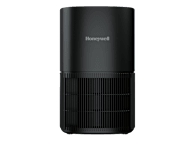
You’d be hard-pressed to find a better-performing air purifier for a small space than the Honeywell HPA120W. This unit is just one of three such models in our ratings that excels at removing dust, pollen, and smoke at both high and low speeds. It includes both a HEPA filter and an activated carbon filter. It lacks a few handy features, like an auto mode and app pairing. But if you’re searching for a cost-effective model that doesn’t sacrifice performance, this one delivers. It has a low upfront cost, and you’ll spend a relatively modest $65 per year on filter replacements and electricity.
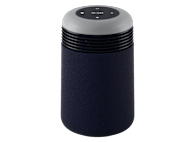
The petite Blueair Mini Restful does a fantastic job at removing dust, pollen, and smoke at both the highest and lowest settings. It doesn’t offer nice-to-have features like a remote control or an auto-sensor that can kick the fan into higher gear when particulate matter spikes. However, our testers say it’s particularly easy to use and portable, weighing just about 3 pounds.
It also checks the box on affordability. This Honeywell model has a reasonable upfront cost and lower-than-average operation costs at $53 per year. According to a survey of CR members, Blueair air purifiers earn excellent predicted reliability and owner satisfaction scores.
How We Pick the Best Air Purifiers
Our engineers find that many of the models we run in our labs can ace our tests at high speed with no problem. It’s often how much debris these machines can capture when not on full blast that’s a challenge. The best air purifiers in our ratings are capable of clearing the air even on low settings—and they do it without making a racket. What’s more, they feature an intuitive design, so you don’t need a PhD in particle physics to operate them. And it’s a breeze to move them from room to room, maneuver the controls, and change filters. We also fold a brand’s owner satisfaction and reliability ratings into a model’s Overall Score.
How CR Tests Air Purifiers
To test air purifiers, we inject smoke and dust particles into a sealed chamber to assess how well each model removes particles between 0.1 and 1 micron. (Human hair has a diameter of roughly 100 microns.) Using a particle counter, we measure the change in particle concentration as the air purifier runs for 15 minutes at the highest speed and then at a lower speed. And because these machines are designed to run day and night, we measure noise levels in decibels at every speed and calculate annual operating costs for filter replacements and energy to run the machine 24 hours a day.
 BEST TIME TO BUY:


